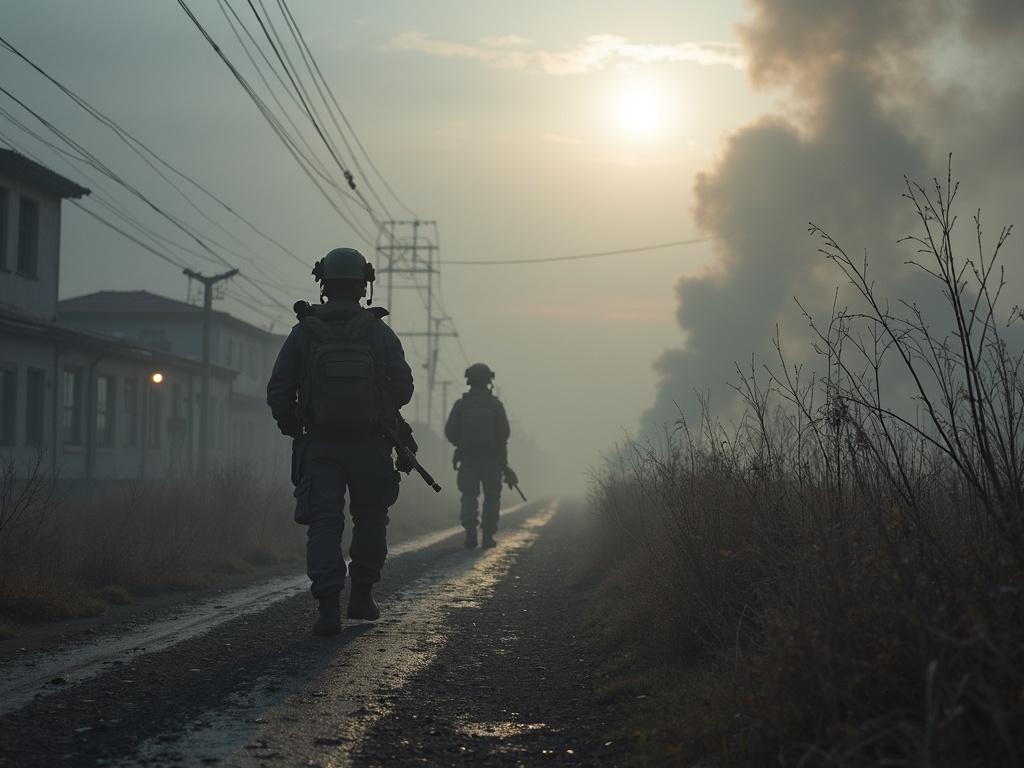
- Ukraine and Russia have mutually accused each other of committing hundreds of ceasefire violations in eastern Ukraine.
- Ukrainian President Volodymyr Zelensky has stated that his nation’s forces will respond “symmetrically” to any Russian attacks.
- The widespread alleged breaches signal a significant breakdown in de-escalation efforts and the fragility of peace accords.
- This surge in hostilities significantly raises the escalation risk, threatening broader European security.
- The situation underscores a critical need for renewed diplomatic efforts and adherence to international law to prevent further conflict.
Kyiv and Moscow are once again locked in a fierce war of words, with both nations accusing the other of committing hundreds of ceasefire violations in recent days. This alarming development threatens to unravel already fragile diplomatic efforts, as Ukrainian President Volodymyr Zelensky declared his nation’s forces would respond “symmetrically” to any Russian attacks. The escalating rhetoric and alleged breaches underscore the precarious security situation in eastern Ukraine and send a chilling signal across the European continent.
Mounting Accusations and Zelensky’s Warning
The mutual accusations paint a grim picture of a breakdown in de-escalation protocols. Ukraine’s military command reported an unprecedented surge in hostile actions, attributing numerous shellings and provocations to Russian-backed separatists. These alleged violations range from artillery fire to drone incursions, causing concern for both military personnel and civilian populations near the contact line.
Responding to this heightened aggression, President Zelensky issued a stark warning. His promise of a “symmetrical response” indicates a shift towards a more assertive defensive posture, implying that any aggression meted out by Kremlin-aligned forces would be reciprocated with equal measure. This stance, while aimed at deterring further incursions, inherently carries an elevated escalation risk, potentially trapping both sides in a dangerous cycle of tit-for-tat retaliation.
Russia’s Counter-Claims and Regional Instability
The Fraying Threads of Peace
True to the pattern of this protracted conflict, Russia swiftly countered Kyiv’s allegations with its own set of accusations. Moscow claims Ukrainian forces are responsible for provocations designed to destabilize the situation and undermine the Minsk agreements – the foundational, albeit often disregarded, framework for peace in the Donbas region. The lack of independent verification for either side’s claims further complicates efforts to de-escalate the situation and fuels an information war alongside the kinetic one.
The concept of “hundreds of ceasefire violations” is not merely a statistical anomaly; it signifies a systemic degradation of trust and adherence to international accords. Each violation erodes the already thin veneer of peace, deepening humanitarian concerns and increasing the likelihood of a broader military confrontation. This constant state of low-intensity conflict keeps the region on edge, making any significant diplomatic breakthrough incredibly challenging.
Editorial Insight: A Dangerous Precedent
For observers at ‘The Peking Brief’, this renewed surge in hostilities between Ukraine and Russia represents more than just a localized flare-up. It underscores the ongoing fragility of European security and the challenges in upholding international law when major powers are at loggerheads. The mutual accusations highlight a profound lack of willingness from both sides to genuinely commit to de-escalation without significant external pressure, or perhaps, a change in strategic calculus.
Zelensky’s “symmetrical response” declaration, while understandable from a defensive standpoint, could become a double-edged sword. It might deter minor aggressions but also lower the threshold for a larger, more destructive conflict. The international community, particularly major global actors, must redouble efforts through existing diplomatic channels to foster meaningful dialogue and ensure accountability for breaches, lest the current tensions spiral into an uncontrolled conflagration with far-reaching geopolitical consequences beyond eastern Europe. The world watches with bated breath as the lines of peace fray further.
Leave a Reply