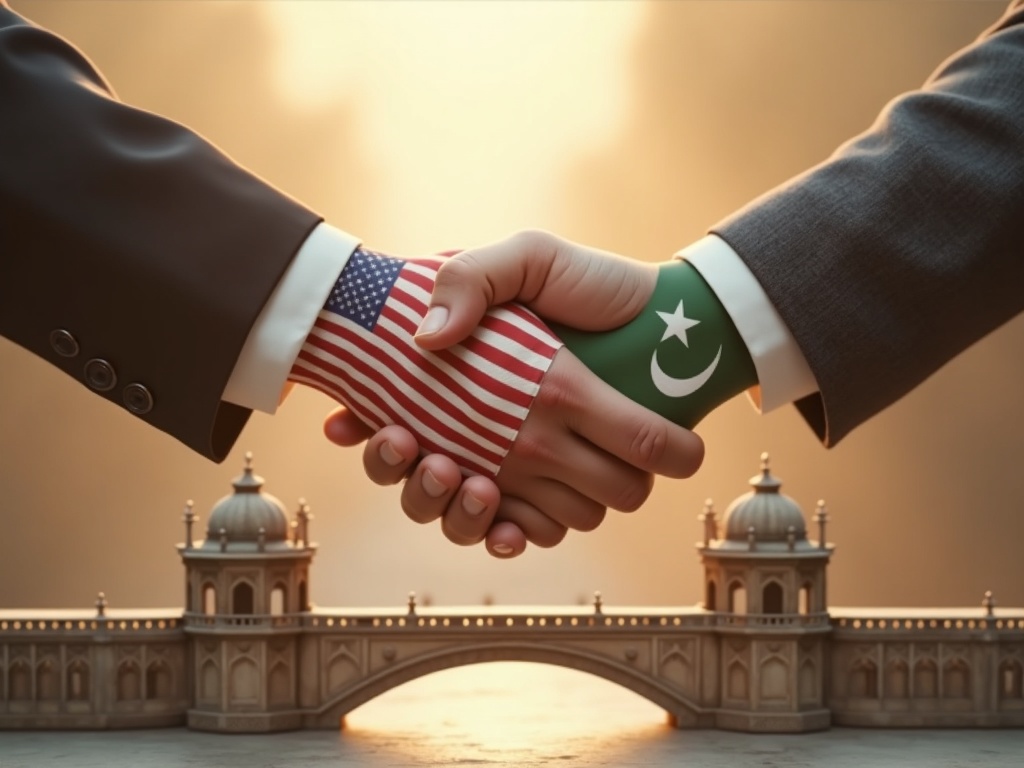
Key Takeaways:
- US representatives are en route to Islamabad for a second round of high-stakes negotiations with Iran.
- President Trump issued stark warnings of military action against Iran’s infrastructure if a proposed deal is rejected.
- Conflicting reports emerged regarding the US delegation’s composition, specifically Vice President JD Vance’s participation.
- The unresolved issue of navigation through the Strait of Hormuz continues to fuel regional tensions and global oil market uncertainty.
- Pakistan maintains extensive diplomatic mediation, facilitating ongoing high-level dialogues.
- Iran acknowledges new US proposals but reiterates its firm refusal to compromise on national interests.
Islamabad is once again at the epicentre of high-stakes diplomacy, preparing to host the second round of direct negotiations between the United States and Iran. These critical talks, aimed at de-escalating a volatile regional crisis, commence under the shadow of President Donald Trump’s latest pronouncements, which blend an offer of a “very fair and reasonable deal” with explicit threats of devastating military action against Iran’s infrastructure.
US Delegation Faces Conflicting Reports
The composition of the American negotiating team has been a point of contention. Initial US media, citing White House sources, indicated Vice President JD Vance would lead the delegation, accompanied by envoy Steve Kushner and Jared Kushner. However, subsequent reports from ABC News and MS Now suggested Vance’s non-attendance, highlighting internal complexities surrounding Washington’s approach to these crucial discussions.
Pakistan’s Sustained Diplomatic Engagement
These renewed efforts follow an inconclusive first round of talks in Islamabad on April 11-12, which, while not yielding an agreement, crucially avoided a complete breakdown. Those discussions were underpinned by a Pakistan-brokered two-week ceasefire, set to expire on April 22. Pakistan’s civil and military leadership has since been engaged in relentless shuttle diplomacy, leveraging its strategic position as a neutral arbiter in a conflict with profound regional and global implications.
Strait of Hormuz: A Persistent Impasse
A significant flashpoint remains the Strait of Hormuz, a vital maritime chokepoint Iran has repeatedly closed in response to the US blockade of its ports. President Trump recently alleged Iranian vessels fired bullets in the strait, a claim Iran denies, reiterating that the US blockade violates the ceasefire. Iran’s Foreign Ministry spokesperson, Esmaeil Baqaei, condemned the US blockade as an “unlawful and criminal” act and a “war crime.” Unrestricted navigation through this critical passage was a core impasse in initial talks, severely impacting global oil prices and shipping.
Iranian Resolve Amidst Core Demands
Beyond maritime access, the US seeks long-term commitments on Iran’s nuclear programme, demanding stringent constraints on enrichment and robust safeguards against weaponisation. Tehran, while acknowledging new proposals conveyed via Pakistani intermediation, maintains a resolute stance. Iran’s Supreme National Security Council affirmed its negotiators “will not make even the slightest compromise,” vowing to defend national interests. Parliamentary Speaker Mohammad Bagher Ghalibaf conceded progress but cautioned “many gaps and some fundamental points remain,” indicating a considerable distance to a final accord.
Intensified Diplomatic Overtures
In a flurry of last-minute diplomacy, Pakistan’s Deputy Prime Minister and Foreign Minister Ishaq Dar engaged with Iran’s Foreign Minister Abbas Araghchi, stressing the “need for continued dialogue and engagement.” Further high-level contact is anticipated, with Iran’s President Masoud Pezeshkian and Pakistani Prime Minister Shehbaz Sharif scheduled for a phone call later today.
The juxtaposition of imminent negotiation with explicit threats casts a long shadow over Islamabad. While Pakistan’s earnest efforts have forged a path to dialogue, the gulf separating Washington and Tehran remains vast, punctuated by deeply entrenched distrust and diametrically opposed interests. The success of these talks hinges not merely on bridging policy differences but on navigating the treacherous terrain of rhetoric and escalating tensions, ensuring that diplomacy, however fraught, prevails over the catastrophic alternative. The world watches, acutely aware that the stakes could not be higher.
Leave a Reply