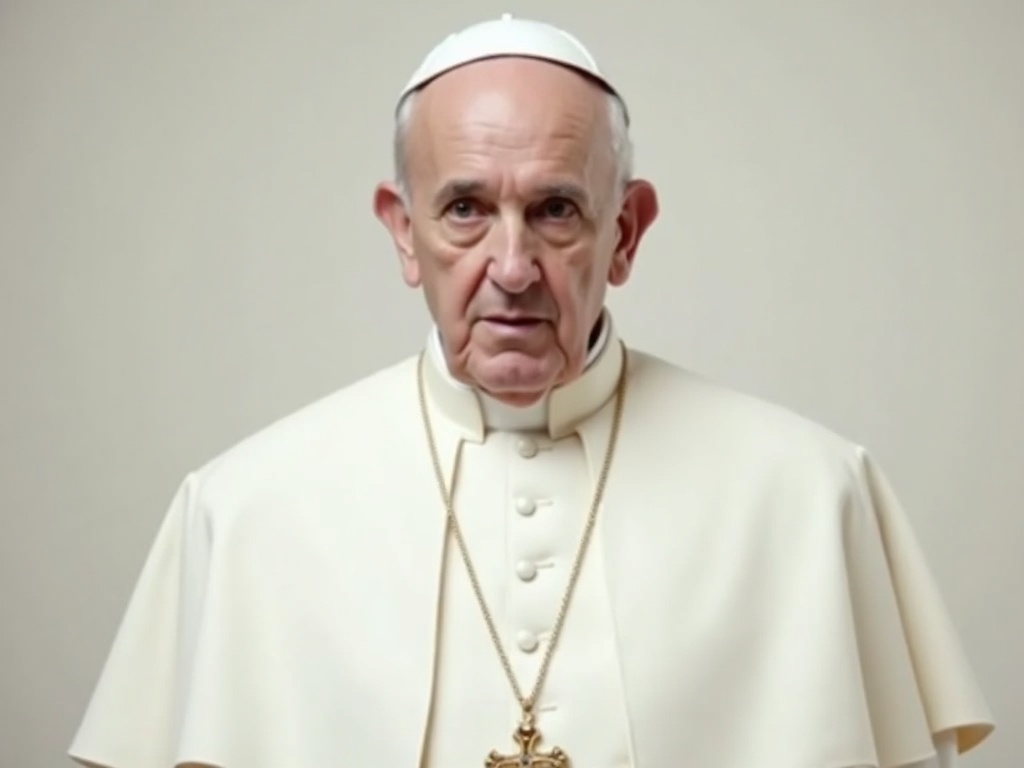
- A public rift between Donald Trump and Pope Francis is alienating a crucial segment of conservative Catholic voters.
- Leading conservative Catholics are publicly aligning with Pope Francis, prioritizing the Papacy’s moral authority and Church social teachings over Trump’s political stance.
- This defection is driven by a profound commitment to Catholic doctrines on immigration, social justice, and the dignity of life, which often clash with Trump’s “America First” rhetoric.
- The erosion of support from this vital demographic poses significant electoral challenges for Trump, particularly in swing states, and signals a fracturing within traditional faith-based political alliances.
In a development sending discernible tremors through American political circles, an escalating, public rift between former President Donald Trump and His Holiness Pope Francis is now demonstrably alienating a critical demographic: conservative Catholic voters. Recent insights from leading conservative Catholic figures, interviewed by the BBC, reveal a pronounced allegiance to the American pontiff’s moral authority and teachings, even when such fealty directly contradicts Trump’s political posture and policy rhetoric. This schism, unfolding in plain view, portends significant implications for the upcoming electoral landscape.
The Unfolding Schism: Moral Authority vs. Political Pragmatism
The perceived friction between Trump and Pope Francis is not novel, yet its public manifestation has reached a new intensity. While Trump’s base has traditionally included a robust segment of culturally conservative voters, including a substantial proportion of Catholics, the current dynamic delineates a clear conflict of principles. Pope Francis, known for his progressive stance on issues such as immigration, social justice, and environmental stewardship, often articulates a vision of global solidarity and care for the marginalized that starkly contrasts with Trump’s “America First” nationalism and often confrontational rhetoric.
Conservative Catholics’ Unwavering Support for the Pontiff
What is particularly instructive is the reasoning articulated by these prominent conservative Catholics. Despite their ideological alignment with many tenets of the Republican platform, their fidelity to the Pope appears to transcend partisan loyalties. Their testimonies suggest a profound commitment to the ecclesiastical authority of the Papacy and the enduring social teachings of the Church, which they view as foundational to their faith. For many, the Pope’s emphasis on the dignity of all human life, the imperative to welcome migrants, and the call for compassion for the poor are not merely political opinions but non-negotiable moral tenets of Catholicism.
One cannot understate the significance of this internal conflict. For a segment of the electorate that often votes based on a confluence of social and religious values, a public divergence between a political leader they once supported and their spiritual head forces a difficult reckoning. The decision to publicly back Pope Francis against a figure like Trump signals a prioritisation of moral conviction and pastoral guidance over political expediency or party affiliation. This move reveals a deeper fault line within the conservative Catholic identity, where adherence to core doctrines of the Church ultimately outweighs loyalty to a secular political figure.
Electoral Ramifications for Trump
The erosion of support among conservative Catholics is far from a minor inconvenience for Trump. This demographic represents a crucial voting bloc, particularly in swing states where even marginal shifts in allegiance can dictate electoral outcomes. While not all conservative Catholics will abandon Trump, the public declarations of prominent figures can embolden others to re-evaluate their positions. The perception that Trump’s rhetoric or policies are at odds with fundamental Catholic social teaching could depress turnout, encourage ballot-splitting, or even prompt defections to alternative candidates. For a campaign that relies heavily on galvanising its base, any sign of fracturing within a key constituency is a cause for strategic concern.
This dynamic also speaks to the broader struggle within American politics regarding the interplay of faith and party. For decades, the religious right has been a relatively cohesive force. However, as the moral landscapes shift and leaders articulate differing visions, the monolithic nature of this bloc is increasingly challenged. The Pope-Trump schism serves as a powerful illustration of this evolving complexity, highlighting how deep-seated moral principles can, for some, ultimately dictate political allegiances.
Broader Implications for Faith and Politics
Beyond the immediate electoral calculations, this public divergence carries profound implications for the future of faith-based political movements in the United States. It suggests that religious identity, while still a potent political force, is not immutable or entirely predictable. For leaders like Trump, cultivating religious support requires more than aligning on a few key issues; it necessitates a broader understanding of the moral compass guiding diverse faith communities. The current rift demonstrates that the moral authority of spiritual leaders, even those with whom a political figure might disagree, can still exert considerable sway, particularly over those who hold their faith as paramount. As the political landscape continues to fragment, the nuanced allegiances of faith communities will undoubtedly play an increasingly critical, and often surprising, role.
Leave a Reply