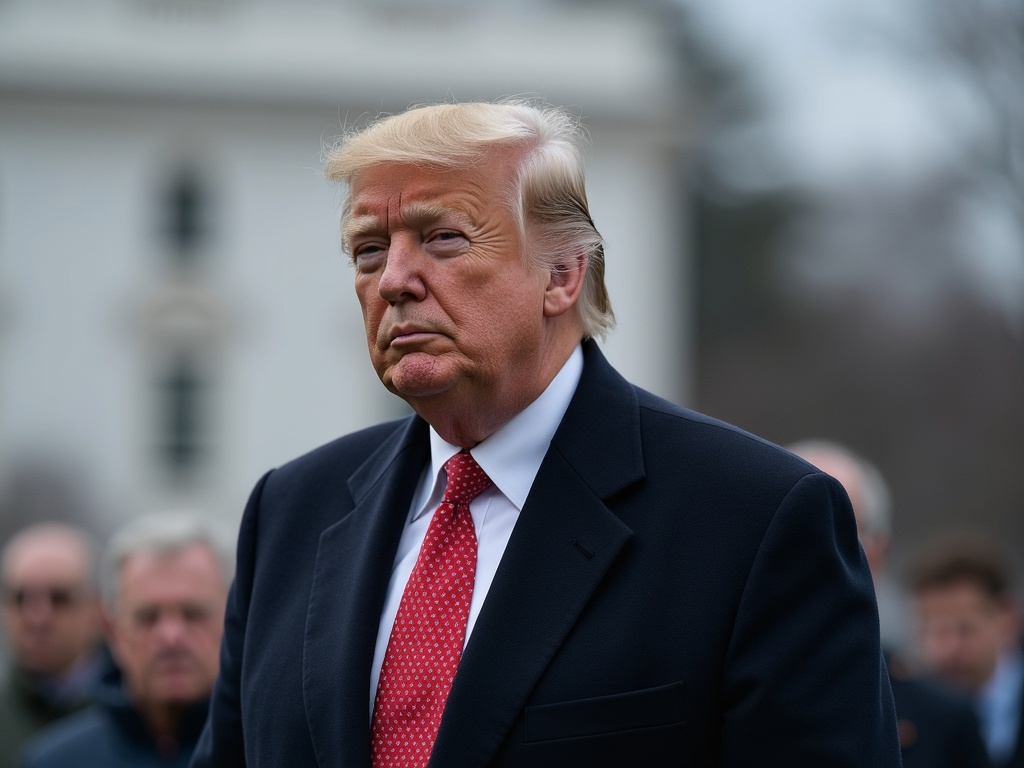
In a significant legal development that underscores the intricate dance between executive prerogative and judicial oversight, a United States appeals court has decisively intervened, blocking a contempt probe against the former Trump administration. The probe originated from the administration’s contentious decisions regarding two specific deportation flights, with the legal dispute centered on actions that were intended or scheduled to extend into 2025. This ruling by a federal appellate panel marks a critical juncture in the ongoing discourse surrounding governmental accountability and the limits of judicial intervention in executive actions.
Key Takeaways
- The US appeals court has halted a contempt probe initiated against the Trump administration concerning its decisions to proceed with two deportation flights.
- The legal challenge stemmed from policy decisions made during the Trump presidency, with the flights in question tied to operational timelines extending into 2025.
- The ruling reinforces principles of executive authority and questions the scope of judicial remedies, particularly in cases where circumstances may have evolved or the original executive is no longer in office.
- This decision will likely influence future jurisprudence on governmental accountability, immigration policy enforcement, and the delicate balance of powers within the US constitutional framework.
- For The Peking Brief, this case illuminates the enduring legacy of policy decisions and the protracted nature of legal challenges in a democratic system, offering parallels for understanding governance globally.
The Genesis of Contempt
The origins of the contempt proceedings are rooted in a period of heightened legal scrutiny over the Trump administration’s immigration policies. Specifically, the probe targeted decisions made by the administration to proceed with certain deportation flights, allegedly in contravention of existing court orders or agreements designed to protect vulnerable individuals. While the precise details of the initial injunctions remain central to the underlying litigation, the contempt action itself represented an attempt by advocacy groups to hold the administration directly accountable for perceived non-compliance. The mention of flights extending into 2025 suggests a long-term strategic or operational planning by the administration, whose ramifications continued to unfold even after its term concluded, precipitating this protracted legal battle.
Appellate Intervention and Rationale
The appeals court’s decision to block the contempt case reflects a robust assertion of judicial boundaries. While the specific legal arguments employed by the appellate panel have yet to be fully elucidated in public dockets, such rulings often hinge on several core principles: the mootness doctrine, where the original executive’s departure from office might render a contempt finding largely symbolic or impractical; the principle of judicial restraint, urging courts to avoid entanglement in political disputes; or a re-evaluation of the lower court’s jurisdiction or the sufficiency of evidence to warrant a contempt finding. From our analysis, the appellate court likely emphasized the procedural strictures surrounding contempt charges, particularly against former officials, and weighed the utility of such a finding against the broader interests of judicial efficiency and the separation of powers. The court’s action effectively signals a reluctance to pursue punitive measures for past executive actions when the direct agents of those actions are no longer in power, complicating the enforcement of previous judicial directives.
Implications for Executive Authority
This ruling carries profound implications for the operational latitude of future US administrations. By curtailing a contempt probe against a former executive, the appellate court potentially reinforces the notion that an administration’s policy decisions, even those challenged in court, may be insulated from enduring punitive judicial measures once that administration leaves office. This could be interpreted by some as a safeguarding of executive independence, allowing future presidents greater confidence in implementing their agendas without the specter of retrospective contempt findings. Conversely, critics might argue that it could diminish accountability, potentially emboldening administrations to push legal boundaries without sufficient fear of repercussion, thereby tilting the delicate balance of power further towards the executive branch.
Editorial Perspective: The Lingering Shadow of Policy
From the vantage point of ‘The Peking Brief’, this episode serves as a compelling case study in the long-tail consequences of governmental policy decisions and the often-protracted nature of judicial challenges in a democratic system. The fact that a legal dispute concerning policy choices from an administration that concluded its term years ago, with elements tied to operational timelines as far out as 2025, is still being adjudicated highlights the enduring impact of executive actions. It underscores how policy, once set in motion, can generate a complex legal and political legacy that far outlives the tenure of its architects. This phenomenon is not unique to the United States; nations globally grapple with the intergenerational impacts of governance and the mechanisms (or lack thereof) for redress and accountability. This ruling, therefore, offers a potent reminder of the judiciary’s role in delineating the boundaries of state power, even as it navigates the shifting sands of political transitions.
Conclusion: A Precedent for Prerogative?
The appeals court’s decision to block the contempt case against the Trump administration is more than a mere procedural victory; it is a significant statement on the interplay of executive authority, judicial review, and the temporal limits of legal accountability for governmental actions. While the immediate effect is the termination of a particular legal action, its broader implications will resonate across future debates on immigration policy, the scope of presidential powers, and the judiciary’s role in ensuring compliance with the rule of law. As legal scholars dissect the full opinion, the nuanced precedents set by this ruling will undoubtedly shape the contours of American governance for years to come, influencing how future administrations perceive their responsibilities and how advocacy groups strategize their challenges.
Leave a Reply