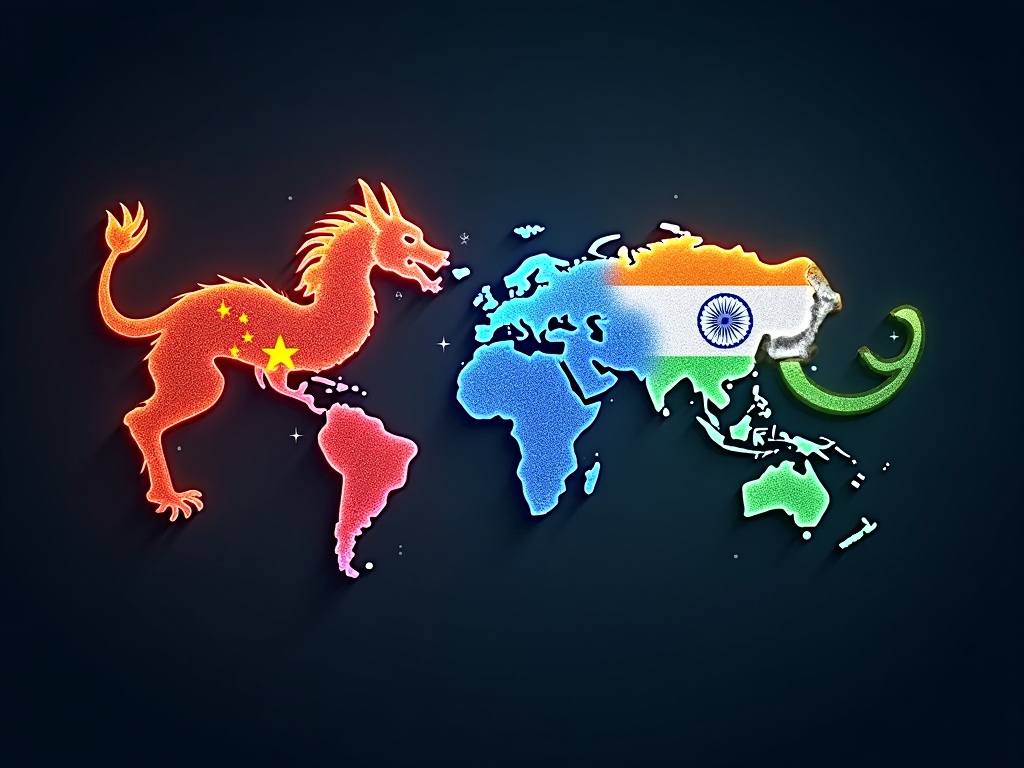
Key Takeaways:
- Foreign Ministers of China, Russia, and India held their 15th trilateral meeting.
- Nations agreed to uphold regional security and the existing economic architecture in the Asia-Pacific.
- The joint statement signals a concerted effort towards stability and a multipolar world order.
- Agreement highlights shared interests in counter-terrorism, economic development, and resisting unilateralism.
- The trilateral framework provides a platform for managing complex relations and presenting a non-Western vision for global governance.
In a significant display of diplomatic alignment, the foreign ministers of China, Russia, and India convened for their 15th trilateral meeting, issuing a joint statement that underscores their commitment to bolstering regional security and the existing economic architecture across the vast Asia-Pacific. This pivotal gathering, held amidst a rapidly evolving geopolitical landscape, signals a concerted effort by the three major powers to shape a stable future for the world’s most dynamic region.
Trilateral Consensus: A New Geopolitical Compass for Asia-Pacific
The 15th trilateral meeting of foreign ministers from China, Russia, and India concluded on Monday with a powerful message of unity regarding the future of the Asia-Pacific. According to a joint statement, the three nations agreed to actively work towards “maintaining regional security and economic architecture” – a declaration that reverberates across global capitals and hints at deeper strategic convergences.
The Joint Statement: Anchoring Stability in a Dynamic Region
The core of the agreement revolves around a shared vision for stability. While specific mechanisms were not immediately detailed, the emphasis on “maintaining” existing frameworks suggests a desire to prevent destabilizing shifts and uphold principles of multilateralism and non-interference. This commitment is particularly salient given ongoing debates about regional alliances and competing visions for the Indo-Pacific. For Beijing, Moscow, and New Delhi, ensuring predictable trade routes, energy security, and collective responses to non-traditional threats appears paramount.
Deeper Dive: Shared Interests Amidst Global Flux
The consensus reached in this trilateral dialogue is not merely a diplomatic formality; it reflects a complex interplay of shared strategic interests, economic imperatives, and a collective desire to foster a more multipolar world order. Despite occasional bilateral tensions, especially between China and India along their disputed border, the larger picture of global shifts often brings these major powers into alignment.
Shared Interests and Geopolitical Positioning
All three nations, to varying degrees, perceive a need to counter unilateral Western tendencies, advocating for a system rooted in international law and sovereign equality. Russia solidifies Eastern partnerships amid sanctions, while China pushes for a global governance model reflecting its rising power. India, an aspiring global player, balances strategic autonomy with engagements across multiple blocs. This trilateral format facilitates coordination on counter-terrorism, climate change, and economic development, often within frameworks like BRICS and the Shanghai Cooperation Organization (SCO).
Economic and Strategic Implications
The agreement on economic architecture signals an intention to reinforce alternative economic pathways and resist attempts to fragment global trade. This could involve bolstering connectivity projects, fostering regional trade agreements, and promoting investment flows that bypass traditional Western-dominated financial systems. The combined economic heft and strategic influence of China, Russia, and India represent a formidable force capable of significantly impacting global discourse and policy-making.
Editorial Insight: A Delicate Balancing Act and Shifting Definitions
This joint declaration, while projecting unity, highlights the delicate balancing act in modern geopolitics. For The Peking Brief, the critical takeaway isn’t just the agreement, but its implication for “regional security” and “economic architecture.” From Beijing, Moscow, and New Delhi’s perspective, “maintaining” these frameworks likely means strengthening non-Western initiatives and challenging perceived Western-centric norms – a desire to reshape, not merely preserve, the status quo.
The trilateral format is a unique forum to manage complex relationships and present a unified front on international issues, offering avenues for de-escalation and a non-Western vision for stability. However, translating this diplomatic consensus into concrete action, particularly when national interests diverge or external pressures mount, will be the true challenge. The inherent rivalry for influence within the Asia-Pacific ensures this cooperation will remain dynamic.
Looking Ahead: Shaping the Multipolar Future
The 15th trilateral meeting serves as a clear indicator of the ongoing shift towards a more multipolar world. As these three giants deepen their engagement, their coordinated efforts will inevitably reshape the diplomatic, economic, and security landscapes of the Asia-Pacific and beyond. Observers will be keenly watching how this professed commitment translates into tangible policies and what implications it holds for existing alliances and institutions in the region.
Leave a Reply