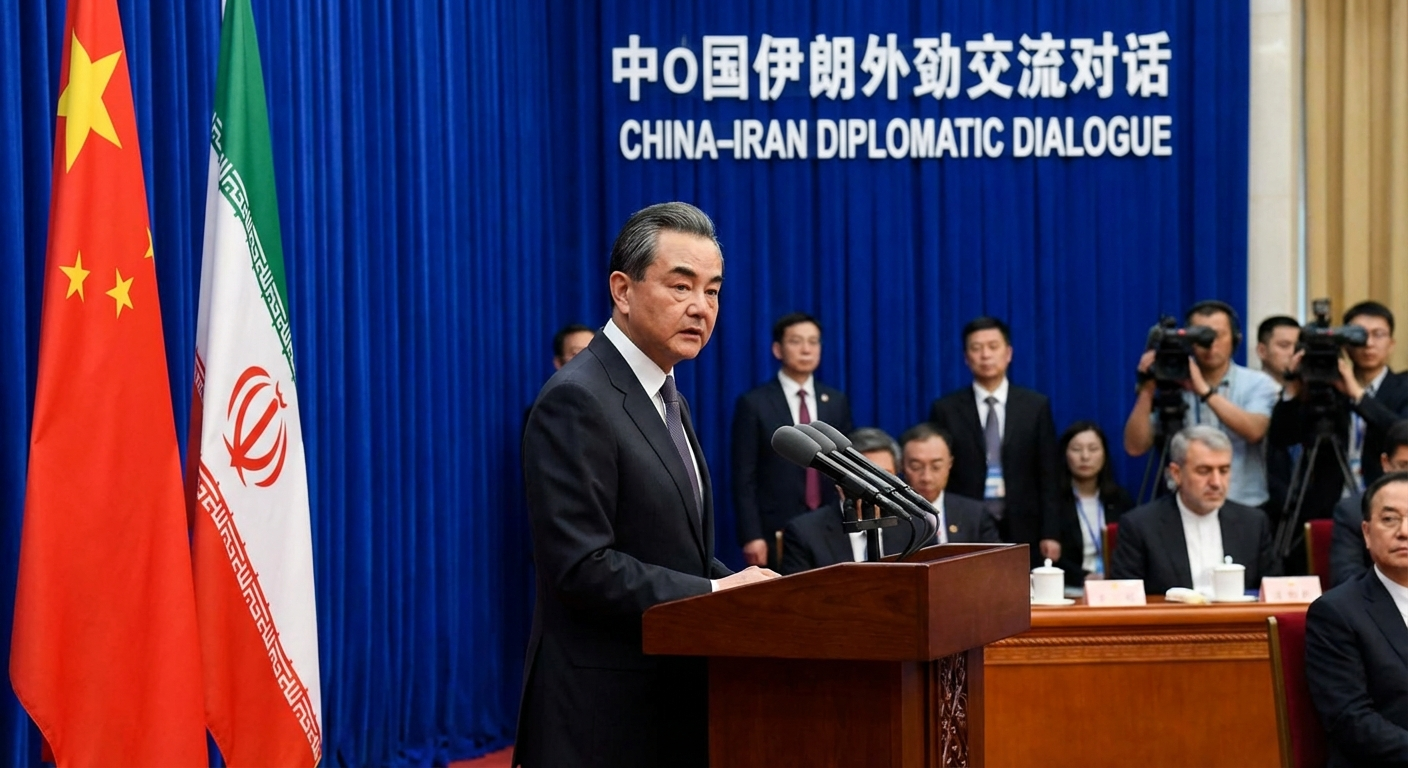
BEIJING – China has issued a strong call for restraint and de-escalation following reports of intensified military actions in the Middle East involving the United States, Israel, and Iran. The Chinese Foreign Ministry, in a statement released early Tuesday, emphasized the critical need to respect national sovereignty and avoid actions that could plunge the region into further chaos.
Diplomatic Engagement
Chinese Foreign Minister Wang Yi has been actively engaging with his counterparts in the region. In a phone call with the Iranian Foreign Minister, Wang reaffirmed Beijing’s principled stance on maintaining peace and stability. “China opposes any actions that violate the sovereignty and territorial integrity of nations,” Wang stated, urging all parties to exercise maximum calm.
The escalation follows reports of airstrikes that have heightened tensions to a breaking point. Beijing, which maintains close economic and diplomatic ties with Iran as well as robust trade relations with other Gulf nations, finds itself in a delicate position. Analysts suggest that China is leveraging its influence to prevent a full-scale regional war that could disrupt global energy supplies and economic stability.
Global Implications
The conflict has already sent ripples through global markets, with oil prices surging amid fears of supply disruptions. China, as the world’s largest oil importer, has a vested interest in the stability of the Middle East. “The security of the Gulf region is indivisible from global economic security,” a ministry spokesperson noted during a press briefing.
Furthermore, China has called on the United Nations Security Council to take immediate action to mediate the conflict. Beijing’s representative to the UN stressed that military solutions would only exacerbate the suffering of civilians and called for an immediate ceasefire and return to diplomatic negotiations.
Strategic Stance
While maintaining its strategic partnership with Iran, China has also been careful not to alienate other regional players. The emphasis on sovereignty and non-interference aligns with China’s long-standing foreign policy principles. However, the severity of the current crisis is testing the limits of this diplomatic balancing act.
As the situation develops, the international community is watching closely to see if China’s diplomatic interventions can yield tangible results in de-escalating one of the most volatile standoffs in recent years.
Leave a Reply